Flora and Fauna of Cusco: The Hidden Natural Wonders Along the Inca Trail
When travelers think of Cusco, they picture ancient stone walls and the silhouette of Machu Picchu against the sky. But there is another wonder equally fascinating one that breathes, blooms, and soars above the ruins: the extraordinary flora and fauna of Cusco.
Thanks to its dramatic geography, Cusco spans multiple ecosystems, from the high Andean plateau down through cloud forests to the edge of the Amazon. This vertical range of altitudes creates a unique sanctuary for hundreds of species found nowhere else on Earth many of them visible directly along the Inca Trail and the route to Machu Picchu.
Flora of Cusco: A Landscape That Changes With Every Step
High Andean Puna (above 3,500 m)
At altitude, the terrain is ruled by Ichu (Stipa ichu), the golden bunchgrass that covers the hillsides, feeds Andean camelids, and protects fragile soils from erosion. Rising dramatically from this grassland are groves of Queñual (Polylepis) — twisted, papery-barked trees that are among the highest-growing trees on the planet and a critical habitat for several endemic bird species.
Valleys and Mid-Altitudes
As you descend into the valleys, the Cantuta (Kantuta) comes into bloom. Known as the Sacred Flower of the Incas, its red, yellow, and white blossoms once adorned royal ceremonies and remain a proud symbol of the Cusco region today. Trekkers on the Classic Inca Trail 4-day route pass through these valleys on the first day of the trek.
Cloud Forest: The Orchid Sanctuary
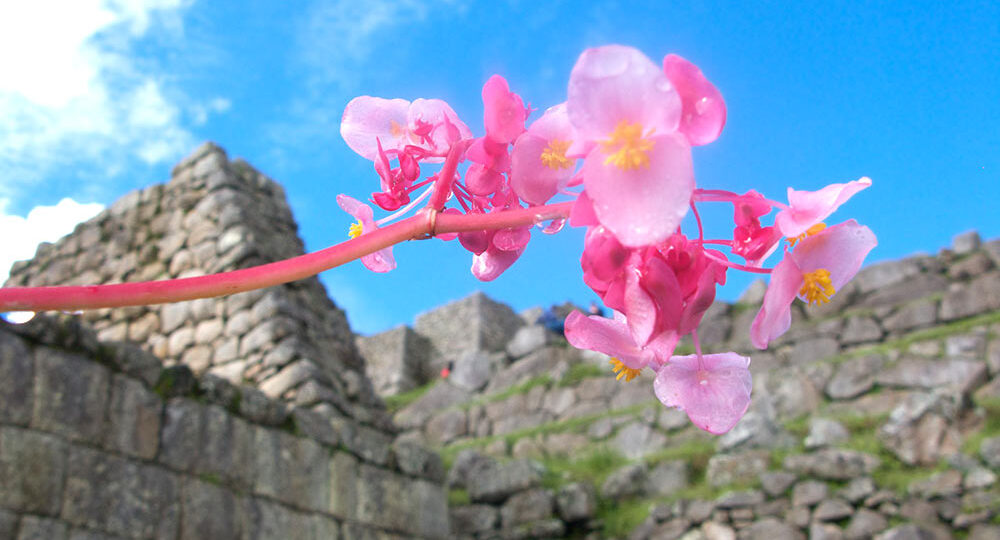
Descending toward Machu Picchu, biodiversity becomes almost overwhelming. Within the Machu Picchu Historical Sanctuary alone, over 400 species of orchids have been recorded many of them endemic. The cloud forest section of the 2-day Inca Trail passes directly through this zone, offering trekkers a genuine rainforest experience just hours before arriving at the Sun Gate.
Wildlife of Cusco: The Animals That Watch Over the Andes
The Andean Condor (Vultur gryphus)
With a wingspan of up to 3 meters, the condor is the undisputed ruler of Cusco’s skies. In Andean cosmology, it connects the earthly world with the sacred realm of the Hanan Pacha. The Chonta Viewpoint, accessible as a day trip from Cusco, is one of the most reliable spots to watch condors soaring on thermal currents.
The Spectacled Bear (Tremarctos ornatus)
South America’s only native bear species inhabits the protected cloud forests surrounding Machu Picchu. Shy and mostly vegetarian, spectacled bears are rarely seen but their presence has been documented near the citadel itself. Their survival depends directly on the conservation of the cloud forest ecosystem that the Inca Trail corridor protects.
The Andean Cock-of-the-Rock (Rupicola peruvianus)
Peru’s national bird. Males are unmistakable: blazing orange-red plumage, round crests, and elaborate courtship displays performed in the dense undergrowth of cloud forests. Birdwatchers on the 4-day Classic Inca Trail have a strong chance of spotting them in the lower cloud forest sections near Wiñay Wayna.
Llamas, Alpacas, and Vicuñas
No image represents the Andean landscape more completely than the camelids. Llamas and alpacas live alongside local communities throughout the Sacred Valley and Cusco highlands and you will almost certainly encounter them at Machu Picchu itself. The vicuña, carrier of one of the world’s finest natural fibers, roams free and protected in high-altitude reserves. It is a living symbol of conservation success in Peru.
Responsible Trekking: How to Protect What You Come to See
The same biodiversity that makes the Inca Trail and Machu Picchu so extraordinary also makes them fragile. At Andean Footprints, sustainable tourism is not a marketing phrase it is the foundation of how we operate.
Here is how every traveler can contribute:
Stay on the trail. Off-trail footsteps destroy micro-ecosystems and native flora that take years to recover. All our guides enforce trail discipline on every route.
Eliminate single-use plastics. We encourage all trekkers to carry reusable water bottles. Mountain waste management is complex; the best piece of trash is the one that is never generated.
Observe, don’t interact. Watch wildlife from a respectful distance. Never feed animals or use camera flash near wildlife. Disrupting natural behavior has lasting consequences for the animals that live there year-round.
Choose operators who are accountable. Look for local tour operators with a genuine environmental commitment guides who know these ecosystems, not just the itinerary. Our team is born and raised in Cusco. These mountains are our home.
See It for Yourself: Trek the Inca Trail with Andean Footprints
The flora and fauna of Cusco are not a backdrop to the trek they are part of the experience. Every elevation change on the Inca Trail reveals a new world: from high grasslands and orchid forests to the cloud-wreathed ruins of Machu Picchu.
Ready to walk among condors and orchids?